Ásta Dóra leikur Grieg - Sinfóníuhljómsveit Íslands
Harpa | Eldborg, Austurbakki 2, 101 Reykjavík Kort
fim. 11.03.2027 19:30
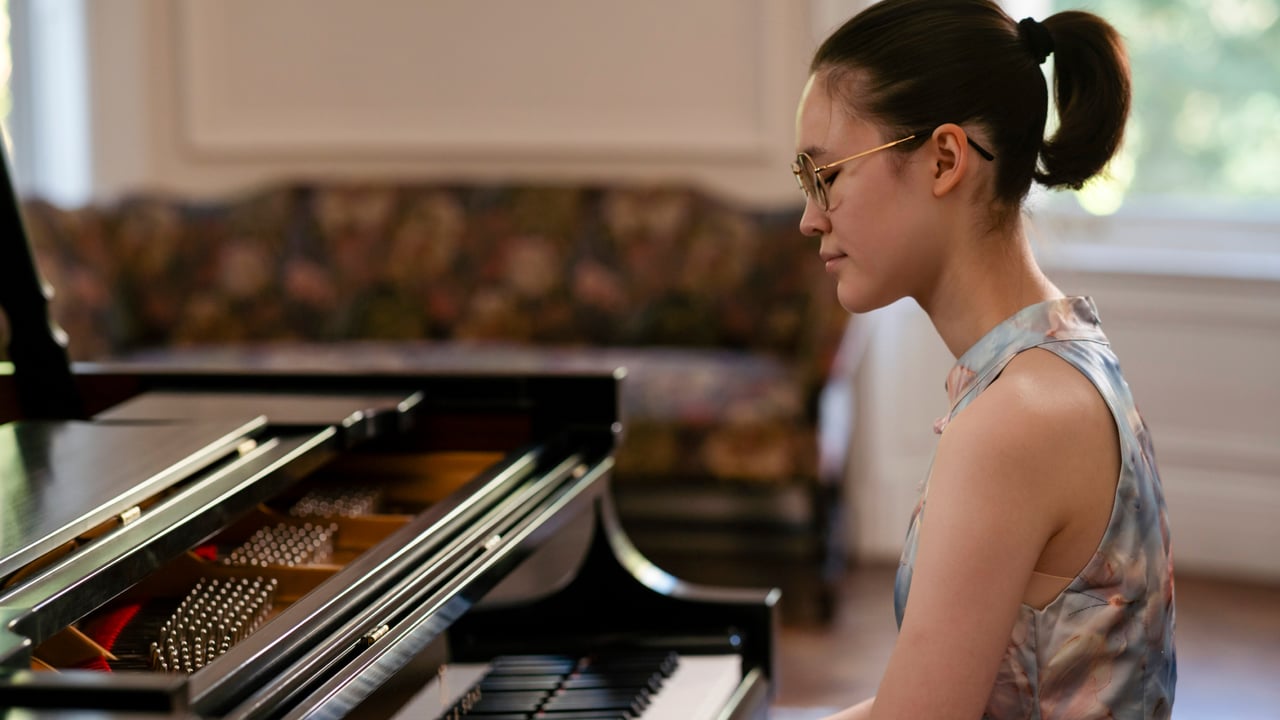
Ásta Dóra Finnsdóttir er ein af okkar efnilegustu píanóleikurum og stundar nú framhaldsnám við einn virtasta tónlistarskóla heims, Curtis Institute of Music í Bandaríkjunum. Þetta er í fyrsta sinn sem Ásta Dóra kemur fram sem einleikari á áskriftartónleikum með Sinfóníuhljómsveit Íslands. Hún leikur hér hinn síunga píanókonsert Griegs sem geislar af lífi og krafti. Konsertinn sló í gegn strax við frumflutning og hefur síðan verið eitt vinsælasta tónverk Griegs.
Á síðari hluta tónleikanna verður Íslandsfrumflutningur á nýju stórvirki eftir Önnu Þorvaldsdóttur, en jafnan er beðið eftir nýjum verkum frá Önnu með mikilli eftirvæntingu um allan heim. Verkið var pantað af Sinfóníuhljómsveit Íslands, Sinfóníuhljómsveitinni í Boston, Gewandhaus-hljómsveitinni í Leipzig og Fílharmóníuhljómsveitinni í Helsinki. Hin norska Tabita Berglund, stjórnandi tónleikanna, er á hraðri uppleið í heimi hljómsveitarstjóra og tekur við stöðu aðalhljómsveitarstjóra Sinfóníuhljómsveitarinnar í Bergen haustið 2026.
Hljómsveitarstjóri
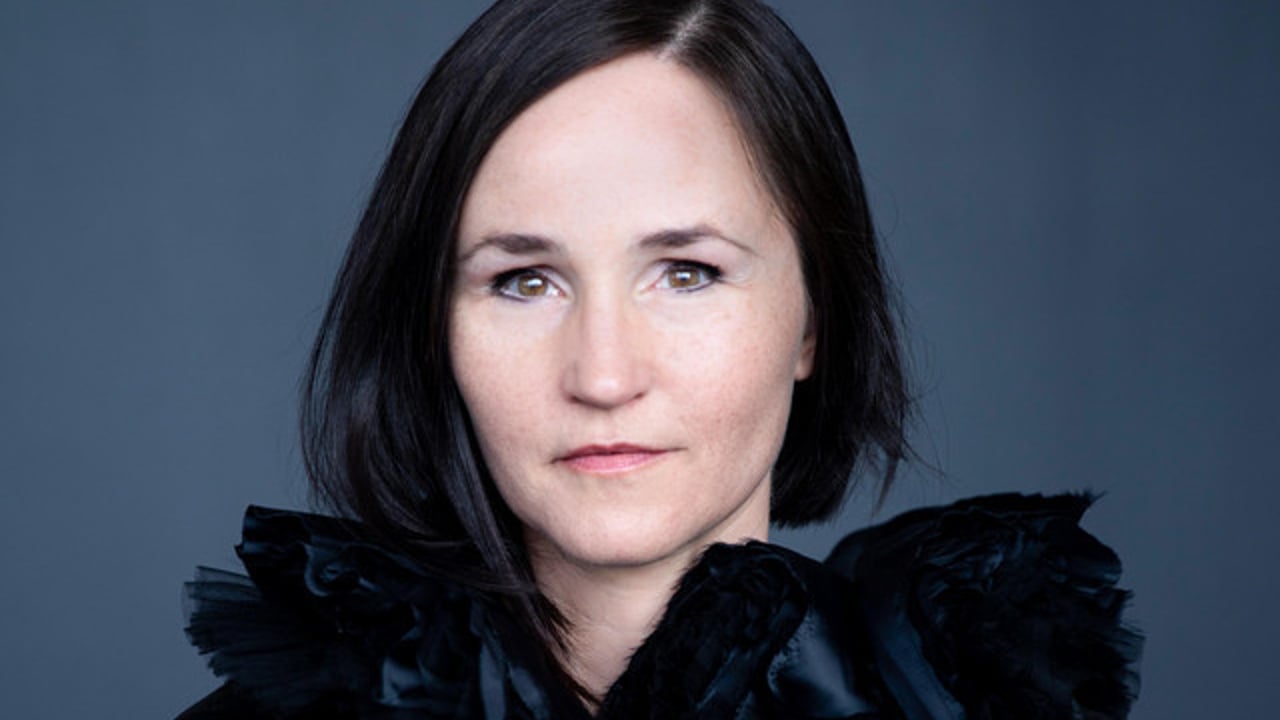
Tabita Berglund
Einleikari
Ásta Dóra Finnsdóttir
Efnisskrá
Carl Nielsen Helíos forleikur
Edvard Grieg Píanókonsert í a-moll
Anna Þorvaldsdóttir Shadows of Solace frumflutningur á Íslandi
Flytjendur
-
 Sinfóníuhljómsveit Íslands
Sinfóníuhljómsveit Íslands flytur töfrandi og æsispennandi tónlist John Williams.
-
Tabita Berglund
Einn af fremstu hljómsveitarstjórum Evrópu af yngri kynslóðinni
-
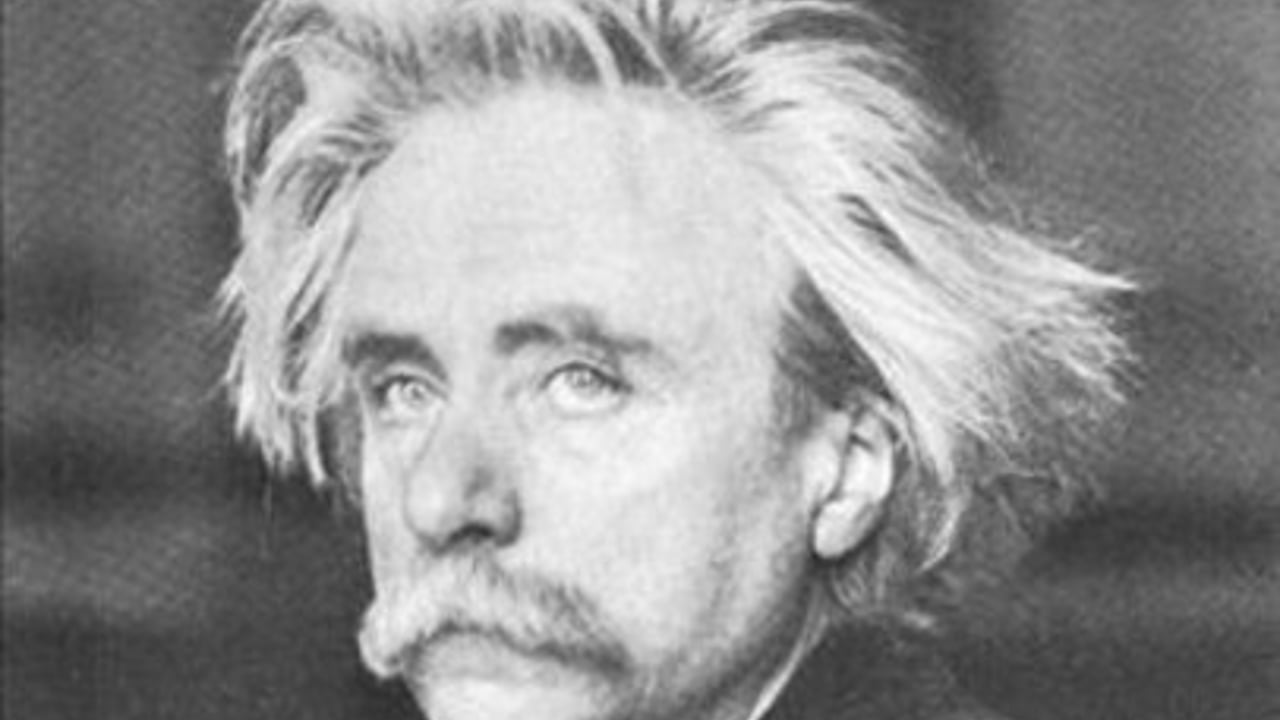
Edvard Grieg
Norway's most famous composer, Edvard Grieg was one of the late Romantics whose music was infused with the folk tradition of his homeland. He dedicated his career to the pursuit of a national sound. The respect he had for his predecessors illustrates the sincerity with which he worked towards this goal. He wrote in the Romantic tradition with, in his own words, the determination to "create a national form of music, which could give the Norwegian people an identity." The clear mountain beauty of a Scandinavian landscape can be felt in the pure modal harmonies and sustained transparent textures combined with the warmth of a Schumannesque melodic sensibility. This is especially true of his hundreds of piano miniatures -- many based on folk dance rhythms -- and his songs. Grieg was actually of Scottish descent on his father's side, but his family had fully assimilated into Norwegian culture. As a youth Grieg studied the folk tunes of his native country. He left his home in Bergen to study at the conservatory in Leipzig. There he began his formal musical education under the auspices of Ignaz Moscheles (piano) and Carl Reinecke (composition). Despite being diagnosed with a form of tuberculosis, which left him with only one functioning lung, Grieg graduated from the conservatory in 1862. The composer had an intense desire to develop a national style of composition, but recognized the importance of becoming well versed in the work of the European masters, and consequently relocated to Copenhagen, studying with Niels Gade. He was thus able to remain in Scandinavia, while working in a thriving cultural center. In 1867 against his family's better judgment, Grieg married his cousin Nina Hagerup, a talented pianist, but whose vocal abilities enchanted the composer even more. She inspired many of his 170 songs. Shortly after their wedding, the couple moved to Oslo, where Grieg supported them by teaching piano and conducting. He and his wife traveled extensively throughout Europe and it was during a period of time spent in Denmark, the composer wrote his landmark opus, the Piano Concerto in A minor. The premiere was given in 1869, with Edmund Neupert as the soloist and was received with an enthusiasm that would attach itself to the composer's reputation for the remainder of his career. It rivals Tchaikovsky's Piano Concerto No. 1 in its drama, virtuosity, and popularity. Grieg admired his literary contemporaries and forged a productive partnership with Björnstjerne Björnson, playwright and poet, with whom he staged performances of such works as Before a Southern Convent, and Bergliot. While Björnson struggled with his output, Grieg met and befriended Henrik Ibsen. The forthcoming collaboration would prove significant for both, as Grieg would supply incidental music to Ibsen's Peer Gynt for an early 1876 production. The premiere was performed to critical acclaim, although the music was not exactly what Ibsen had hoped, and eventually led to Grieg's scoring of Peer Gynt into the popular Suites 1 and 2 (1888 and 1893 respectively) for full orchestra. As a result, Grieg enjoyed tremendous celebrity and continued to travel extensively, often meeting internationally renowned composers such as Tchaikovsky, Brahms, and Liszt, among others. In addition to a grant he was awarded in 1874, Grieg was able to earn the majority of his money by adhering to a vigorous schedule of recital tours and conducting engagements. He served briefly as the music director of the Bergen Symphony Orchestra, and from 1880-1882, held the same position at the Bergen Harmonien. Another popular suite, From Holberg's Time -- for piano or for orchestra -- was composed in 1884 and pays homage to the music of Baroque era. In 1885, Grieg and his wife relocated once again, this time back to Bergen, where he built their celebrated home, Troldhaugen. The property, a popular tourist destination to this day, features a secondary building overlooking the water, which the composer used as his work area, as he could only work in solitude. Grieg and his wife summered in Norway and departed each fall for European tours that would last the remainder of the year. He was adored wherever he traveled and lived at a pace that would eventually catch up with him. Grieg died of chronic fatigue, with much credit given to his lifelong health problems, in his hometown in 1907. ~ David Brensilver, Rovi
-
Anna ÞorvaldsAnna Thorvaldsdottir’s (b. 1977) “seemingly boundless textural imagination” (NY Times) and striking sound world has made her “one of the most distinctive voices in contemporary music” (NPR). Her music is composed as much by sounds and nuances as by harmonies and lyrical material – it is written as an ecosystem of sounds, where materials continuously grow in and out of each other, often inspired in an important way by nature and its many qualities, in particular structural ones, like proportion and flow.
Anna’s “detailed and powerful” (Guardian) orchestral writing has garnered her awards from the New York Philharmonic, Lincoln Center, the Nordic Council, and the UK’s Ivors Academy, as well as commissions by many of the world’s top orchestras. CATAMORPHOSIS was premiered by the Berlin Philharmonic and Kirill Petrenko in January 2021, following the orchestra’s European premiere of METACOSMOS with Alan Gilbert in 2019. CATAMORPHOSIS received its UK premiere by the City of Birmingham Symphony Orchestra and Ludovic Morlot in June 2022, with the US premiere with the New York Philharmonic and Santtu-Matias Rouvali taking place in January 2023. ARCHORA - the latest addition to Anna’s “ever-growing and ever more essential catalogue of orchestral pieces” (BBC Radio 3) - was premiered at the BBC Proms in August 2022, by the BBC Philharmonic and Eva Ollikainen. The work received its US premiere with the LA Philharmonic and Eva Ollikainen in May 2023, and its French premiere with Orchestre de Paris and Klaus Mäkelä in January 2024. A recording of the work was named among the best of 2023 by the New York Times, Boston Globe, and NPR. And “while [she] has made the symphony orchestra her own,” according to Gramophone Magazine, “her chamber music is cut from the same cloth and somehow sounds with much the same combination of immensity and intimacy.” Anna’s first string quartet Enigma was recorded and released by Sono Luminus in August 2021, performed by the Spektral Quartet, and was one of the New York Times’s recordings of the year (“a masterly entrance to the genre”). Her second “entrancing” (New York Times) quartet Rituals was commissioned by the Danish String Quartet and premiered in 2023. Portrait albums with Anna’s works have appeared on Deutsche Grammophon, Sono Luminus, and Innova.
Anna’s music is widely performed internationally and has been commissioned by many of the world’s leading orchestras, ensembles, and arts organizations – such as the Berlin Philharmonic, New York Philharmonic, Los Angeles Philharmonic, Orchestre de Paris, City of Birmingham Symphony Orchestra, Gothenburg Symphony Orchestra, Munich Philharmonic, International Contemporary Ensemble, Ensemble Intercontemporain, Danish String Quartet, BBC Proms, and Carnegie Hall. Among the many other orchestras and ensembles that have performed her music include the Royal Concertgebouw Orchestra, Boston Symphony Orchestra, BBC Symphony Orchestra, BBC Philharmonic, London’s Philharmonia Orchestra, San Francisco Symphony, NDR Elbphilharmonie Orchester, Toronto Symphony Orchestra, Oslo Philharmonic, Iceland Symphony Orchestra, Bang on a Can All-Stars, Quatuor Bozzini, BBC Singers, The Crossing, the Bavarian Radio Choir, Münchener Kammerorchester, Avanti Chamber Ensemble, Royal Stockholm Philharmonic, Vienna Radio Symphony Orchestra, BBC Scottish Symphony Orchestra, Finnish Radio Symphony Orchestra, Helsinki Philharmonic, Netherlands Radio Philharmonic Orchestra, Tokyo Metropolitan Symphony Orchestra, Shanghai Symphony Orchestra, and Royal Scottish National Orchestra.
Portrait concerts with Anna’s music have been featured at several major venues and music festivals, including Wigmore Hall, Tanglewood Festival of Contemporary Music, Lincoln Center’s Mostly Mozart Festival in NYC, London’s Spitalfields Music Festival, Münchener Kammerorchester’s Nachtmusic der Moderne series, the Composer Portraits Series at NYC’s Miller Theatre, the Leading International Composers series at the Phillips Collection in Washington DC, Knoxville’s Big Ears Festival, Chicago’s Museum of Contemporary Art, Brooklyn’s National Sawdust, and Gothenburg Symphony Orchestra’s Point Festival. Other prominent venues and festivals include the BBC Proms, Aldeburgh Festival, London’s Royal Opera House, Southbank Centre, Lucerne Festival, Tanglewood Music Festival, Darmstadt Summer Course, Pierre Boulez Saal Berlin, CERN, ISCM World Music Days, Nordic Music Days, Ultima Festival, Beijing Modern Music Festival, Reykjavik Arts Festival, Tectonics, Huddersfield Contemporary Music Festival, Helsinki’s Musica Nova Festival, and the Kennedy Center in Washington DC.
Anna is currently based in the London area. She regularly teaches and gives presentations on composition, in academic settings, as part of residencies, and in private lessons. Invited lectures and presentations include Stanford, Columbia, Cornell, NYU, Northwestern, University of Chicago, Sibelius Academy, and the Royal Academy of Music in London. Composer-in-Residence with the Iceland Symphony Orchestra 2018-2023, Anna was in 2023 also in residence at the Aldeburgh Festival and the Tanglewood Festival of Contemporary Music. In 2024-2025, she is the Tonhalle Orchestra’s Creative Chair. She holds a PhD (2011) from the University of California in San Diego. -
Vortónar - Ásta Dóra Finnsdóttir - flytur spennandi efnisskrá á píanó
Píanóleikari og styrkþegi Tónlistarsjóðs Rótarý.