Twenty One Pilots - Ohio Stadium
Ohio Stadium, 411 Woody Hayes Dr., 43210 Columbus Kort
lau. 17.10.2026 18:00
All persons entering Ohio Stadium are subject to inspection. Guests with medical or childcare needs must enter through the Steinbrenner Band Center entrance (between Gate 10 & 12) or at the Press Entrance (between Huntington Club and Gate 23). Bags are NOT permitted in Ohio Stadium. Clutches, wallets or wristlets (with or without a strap) no larger than 5 inches x 8 inches x 1 inches are permitted. Club Seats: A limited number of Club Seats (see MAP for locations) are available offering armrests and chairbacks PLUS convenient access to the air-conditioned club, concessions and restrooms.
Flytjendur
-
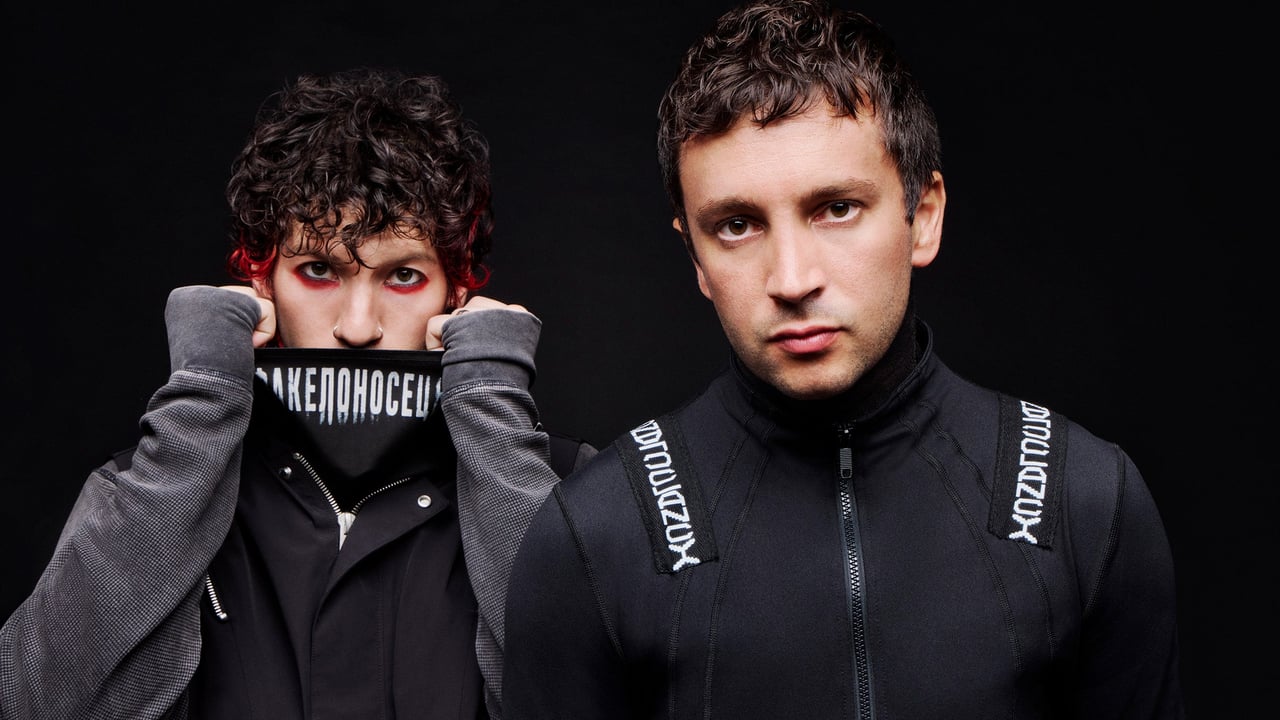
TWENTY ØNE PILØTS
Twenty One Pilots is an alternative rock duo from Columbus, Ohio. It started out as a band in 2009, formed by singer and songwriter Tyler Joseph, bassist Nick Thomas, and drummer Chris Salih. Joseph and Thomas were high school friends, and Joseph later met Salih while attending Ohio State University.
-
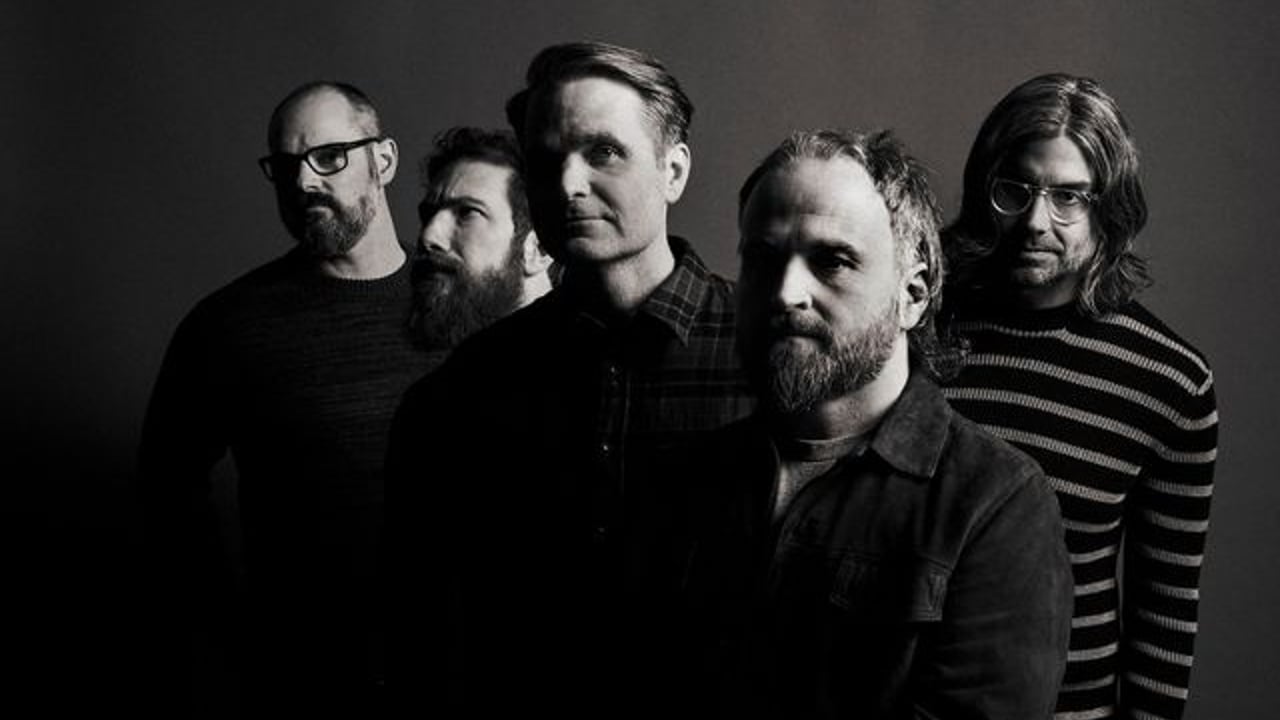
Death Cab For Cutie
When the writing of Asphalt Meadows began in the early part of the pandemic, Death Cab for Cutie wasn't sure how to make a record. Singer/songwriter Ben Gibbard, bassist Nick Harmer, drummer Jason McGerr, guitarist/keyboardist Dave Depper, and keyboardist/guitarist Zac Rae lived in four different cities. Being in the studio together wasn't an option. Though Gibbard started writing songs at the end of their last tour, he felt like he was hitting a wall after being trapped in his home studio for months. So he hatched a plan to shake things up.
"A work week is Monday through Friday and there are five members of the band," Gibbard explains. "So on Monday, someone put together a piece of music and shared it. And then the next person took it, with the order decided randomly. On your day, you had complete editorial control."
At the end of each week, they finished a rough song mix. Sometimes, songs were transformed entirely, with a key change or altogether different tempo. "After we started, we had a lot of success," Gibbard says.
While not all of the songs on Asphalt Meadows came from these sessions, over half of them did. Songs Gibbard presented as demos also went through the process, allowing everyone to figure their parts out before going into the studio with producer John Congleton (St. Vincent, Angel Olsen, Explosions in the Sky).
Harmer calls the experience of writing this way incredibly inspiring. "Having exactly one day to work on each track allowed me to not overthink things," he says. "I had to come up with something compelling and get it completed or the whole process would break down."
"I believe everybody started finding ideas and performances that might not have happened if we'd been in the same room writing," McGerr adds.
The first track released off the album, "Roman Candles," was inspired by a drum part from the '70s Krautrock act Faust and Gibbard's desire to write something for the record that was short, loud, and thrashy. "The lyrics were cobbled from a couple of different songs dealing with my general sense of existential dread and anxiety, the feeling that the fabric that weaves a functioning society together was crumbling during the pandemic," he says.
"Here to Forever" was built on the idea of looking at the past without idealized nostalgia and evolves into a soul-searching song about wanting spiritual clarity. "Foxglove Through the Clearcut" finds Gibbard delivering spoken word verses and an ever-growing drum bridge by McGerr that pushes the music forward into a chorus of beautiful harmonies.
Friendship is the inspiration for "Wheat Like Waves." Spending time with Torquil Campbell of Stars at Niagara-on-the-Lake in Canada while listening to Prefab Sprout prompted Gibbard to write about an adult male friendship that has spanned years.
Rae recalls working collaboratively with McGerr on "Fragments From the Decade." "We had gone into a studio and played drums and keys duets for a few hours," Rae says. After editing and sharing, what came back from Gibbard in the next 24 hours was very nearly the final song. "Not everything was that fast or easy, but a lot of what made it on the record certainly was."
"Rand McNally" is a poignant track about building a legacy. "This is my life's work," Gibbard says. "When members leave bands, they're often seminal members. That fans continue to support them is a testament to how important the music is to them. I wanted to write something to and for everyone who has been in this band, who helped make it what it is, to say I'm not going to let the light fade." Depper was the second person to pick the track up and immediately knew it was special. "I felt drawn to playing acoustic piano on this track, something I'd normally never do because Zac is 4000X the piano player that I am. But given the space and solitude that this process allowed, I confidently contributed a piano track and melodic line that I'm really proud of." Depper felt “don’t let the light fade” had a hymnal quality and decided to use it as a reprise. “I didn't want the song to end yet,” Depper says. “So I was inspired to create a coda to the song based on that line, with layers of harmonies joining in with each refrain.”
The final track, "I'll Never Give Up on You," stands out in its round-robin writing style for Rae. "The song came to me as a groovy, single chord idea, and I added some fairly strange, almost jazzy piano voicings over it. I don't know that we would have settled on that if we had been all together in the room."
After 25 years as a band, going about the writing and recording process unconventionally pushed Death Cab for Cutie creatively in new and unexpected directions.
-
 twenty one pilotsFormed during the punk era of the 1970s while still in secondary school in Crawley, West Sussex, England, The Cure has been one of the most enduring bands of the last thirty years, even if that has come at the price of multiple line-up changes, with only original frontman Robert Smith remaining in the band. Shunning the anarchistic tendencies of many punk bands after their formation in 1976, The Cure's first release was Killing an Arab, based on material from French writer Albert Camus' "L'Etranger" (translated into English as The Stranger or The Outsider). This track courted controversy because of its theme (misinterpreted as racist, it was in fact, about the futility of killing any ethnicity), but it started to secure a small following, which grew following the release of debut album Three Imaginary Boys and non-LP single Boys Don't Cry in 1979, the latter of which would become one of The Cure's most famous songs.
Following this, The Cure moved from their punk leanings into the portentous post-punk territory, releasing three albums of doom-laden rock in three years, Seventeen Seconds, Faith and Pornography, the latter of which charted inside the UK top 10, though the band were repeatedly dogged by the "Second-class Joy Division" tag. The group's fifth album, following their third set of line-up changes, Japanese Whispers was, through their desire to escape the Joy Division description, a poppier effort, featuring danceable singles like Let's Go to Bed alongside pop songs like Love Cats. Following the commercial disappointment of follow-up album The Top in 1984, The Cure returned to form with 1985's The Head on the Door. Featuring the singles In Between Days and Close to Me, The Head on the Door was distant from the band's punk roots, having more in common with successful alternative bands like The Smiths and Echo & the Bunnymen than their gloomier roots.
Two years later, the eighth studio album Kiss Me, Kiss Me, Kiss Me was a more stadium-sized effort, though featuring audacious pop songs like Why Can't I Be You, it was seemingly caught between two styles. However, it was the band's ninth effort (following the departure of last surviving founder member other than Robert Smith, Lol Tolhurst), Disintegration, that would be their greatest success, both critically and commercially. Disintegration spawned hit singles like Lullaby (no.5 in the UK), Love Song (an impressive no. 2 in the USA), Pictures of You, and Fascination Street. The album itself was a culmination of The Cure's directions through the eighties, featuring the poppier side combined with the more tender aspects, as well as the gloomier facets.
Following this, a remix compilation named Mixed Up was released in 1990, featuring one new track, Never Enough, and two years later tenth studio album Wish surfaced, which was a hit mainly from the momentum gained by Disintegration, though it also featured their most famous pop song, Friday I'm In Love (no.6 in the UK and no.18 in the US). During the years following this, the band became distracted and discouraged by the lawsuit launched by former member Lol Tolhurst, who felt he had been deprived of royalties. As a result, the 1996 album Wild Mood Swings felt unfocused, and was a critical and commercial failure, though the single Mint Car was a moderate hit.
In 1997, the Cure released the compilation Galore, featuring new song Wrong Number. Three years later, at the release of original album Bloodflowers, Robert Smith announced it would be the last album for the band, the album itself being a return to the gloomier rock of Pornography and Faith. Resultantly, another hits compilation was released in 2001. However, in 2004, the band surprised all by returning with a self-titled album, their twelfth studio album, which was a surprise hit, reaching the US Top 10, its lead single - The End of the World - becoming a modest hit on Modern Rock radio, and receiving a relatively warm reception from the press.
In May 2005, Smith fired Roger O'Donnell and Perry Bamonte from the band, along with Bamonte's brother Daryl, who had been The Cure's tour manager for many years. The remaining members of the band (Robert Smith, Simon Gallup and Jason Cooper) made a few appearances as a trio before it was announced that Porl Thompson would be returning to The Cure.
Their thirteenth studio album was penciled in for the first quarter of 2007, but its release was postponed. They played one live concert in Miami (23 March 2007) at the unlikely dance-focussed Ultra Music Festival. Further concerts in 2007 followed in Australasia: Fuji Rock Festival, Japan (27 July); Hong Kong (30 July); Singapore (1 August) and a tour of Australia and New Zealand.
The Australasian concerts were the first in the region since the Dream Tour of 2000 in support of Bloodflowers. These 4Tour dates featured a heavier, guitar-based sound (with Roger O'Donnell's departure The Cure's signature delicate guitar/keyboard layering also vanished) and no new songs were included in the sets. However, fans were treated to close to three hours of pure, classic The Cure, the band playing a long string of hits and fan-favourites before ending their shows with thrashing encores which delved into their back catalogue to some of their earliest recordings such as, Fire in Cairo, Grinding Halt and Three Imaginary Boys.
An Autumn US tour was to follow but was eventually cancelled to enable the band to finish the recording and mixing of the new record. Despite the cancellation of the tour, four shows were played in October 2007, the last three in Mexico City. Here The Cure introduced a handful of new songs which displayed both the melodic/pop as well as the sombre/tender aspect of their songwriting.
In 2008, The Cure embarked on the next leg of the 4Tour, starting in Stockholm (9 Feb) and continuing through to London (20 Mar) before heading across the Atlantic to complete the previously cancelled tour of 2007. The European 4Tour saw the band deliver powerful shows lasting over three hours, none more exhilarating and charged than their superb performance at Vienna's small-sized, 3000-capacity Gasometer (23 Feb). In Paris, Bercy (12 March), The Cure returned to the stage for an amazing fourth encore, ending the 3 hour 30 mins show with their emotional classic, Faith. In London (20 Mar), The Cure were again in top form, performing for over 3 hours and offering a great set including brilliant versions of A Night Like This, From the Edge of the Deep Green Sea, Friday I'm In Love and Disintegration. Also notable was the magnificant, swirling guitar playing of Porl Thompson on the often over-looked Wrong Number and Never Enough, featuring a guitar-less and dancing Robert. The set included a large number of pop hits drawing a huge reaction from the crowd; amongst them: Hot Hot Hot !!!, The Lovecats, Close to Me and Why Can't I Be You?. New songs played were: The Only One (formerly known as Please Project), Freakshow and the emotional A Boy I Never Knew.
Finally, the 4Tour reached stateside in May/June 2008. The Cure again thrilled fans by playing epic yet energetic shows. Although the setlists on this leg of the tour followed a similar structure to those heard in Europe, the band also mixed in a few songs and encores that added a darker energy. To open and close the main set, the band occasionally played, Out of This World and Bloodflowers whilst The Holy Hour, Other Voices, Faith and the rarely-played Forever entered their set as part of The Cure's hour-long three-section encores. A further glimpse of their forthcoming album was heard via the inclusion of more new songs: Underneath The Stars, The Perfect Boy, Sleep When I'm Dead and Baby Rag Dog Book. In addition to the recording of the Paris, France show, both the Charlotte, N.C. and New York City, N.Y. (Madison Square Garden) concerts were filmed for a possible TV/DVD release.
In preparation for the release of their new album (believed to be titled) 'Dream 13', The Cure released 4 singles and a remix EP in 2008. Starting with the long-awaited release of The Only One/NY Trip on May 13, each single was released on the 13th of each month leading up to the October 13 release of the album. The artwork for the singles, The Only One, Freakshow/All Kinds of Stuff, Sleep When I'm Dead/Down Under, The Perfect Boy/Without you and Hypnagogic States EP (remixes of all 4 singles), was produced by Porl Thompson's 'Parched Art' and was reminiscent of the covers for, Primary, The Caterpillar, Lovesong, High, Friday I'm In Love, A Letter to Elise and the album Wish.
The Cure...
The Cure official website: www.thecure.com
Chain of Flowers fan website: http://ourworld.compuserve.com/homepages/ChainofFlowers