David Gray | Past & Present Tour | Manchester
Liverpool Rd, Eccles, Manchester M30 7SA, UK, Liverpool Rd, Eccles, Manchester M30 7SA, UK, Urmston Kort
fim. 02.07.2026 18:00
David Gray brings his Past & Present Tour to Manchester Barton Aerodrome on Thursday 2nd July!
This is a 14+ event. Anybody under the age of 18 must be accompanied by a legal guardian.
Manchester, UK, Acclaimed British singer-songwriter David Gray will bring his Past & Present Tour to Barton Aerodrome, Manchester on 2nd July 2026. The event is proudly presented by JBM Music & Barton Live.
The Past & Present Tour celebrates Gray’s remarkable career, showcasing timeless hits from his multi-platinum albums alongside fresh material that reflects his continued evolution as an artist. Fans can expect a captivating live show filled with powerful vocals, heartfelt lyrics, and the intimate energy that has made Gray one of the UK’s most beloved performers.
Barton Aerodrome, one of Manchester’s most historic and unique outdoor event spaces, provides the perfect setting for this special concert. With its wide-open landscapes, atmospheric backdrop, and easy access from the city centre, the venue offers a truly memorable summer evening experience for music fans.
About David GrayDavid Gray first captured international attention with his landmark album White Ladder, which went on to sell over 7 million copies and became one of the UK’s best-selling records of all time. With unforgettable songs such as Babylon, Sail Away, and This Year’s Love, Gray’s unique blend of folk, rock, and electronic elements redefined the singer-songwriter genre at the turn of the millennium.
Across his career, Gray has released a string of critically acclaimed albums and sold more than 12 million records worldwide. Known for his emotive songwriting, distinctive voice, and powerful live performances, he continues to inspire both long-time fans and new audiences alike. His enduring influence has cemented him as one of Britain’s most respected and cherished musical artists..
CAR PARKING
on-site parking is available.
Parking Entrance What3Words: https://w3w.co/stiff.lions.neatly
Parking is on grass. Please follow steward and traffic management guidance.
Car park tickets - https://bit.ly/BartonLIVEParking
Important Parking Info
No overnight parking
• Vehicles left after hours may be towed
• Vehicles are parked at the owner’s risk
• Please do not park in residential areas
Flytjendur
-
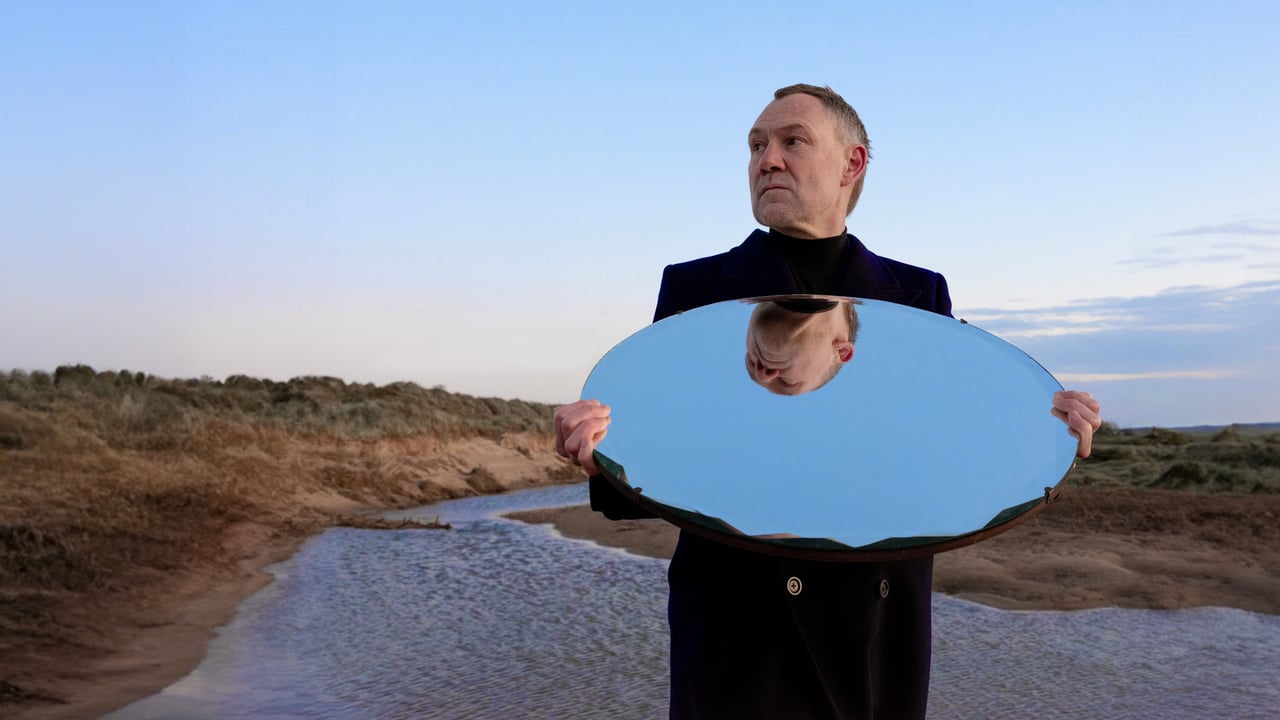
David Gray
Recorded for no budget in a Stoke Newington bedroom in 1998 by a down on his luck singer-songwriter and self-released on a kitchen sink label, White Ladder slowly (very, very slowly) found an audience. It took a year to creep into the lower reaches of the British charts, then worked its way all the way up to number one. White Ladder eventually spent 3 years (from May 2000 to March 2003) in the UK top 100, spawning classic hit singles ‘Babylon’, ‘Please Forgive Me’ and ‘Sail Away’. It went on to sell over 7 million copies worldwide. It remains in the top 30 best-selling British albums of all time and the best-selling album ever in Ireland (a nation who know a good song when they hear it).
Celebrating its 20th anniversary with an expanded edition, it is interesting to consider the extraordinary aftermath of White Ladder. Its success spawned a new wave of singer-songwriters in an acoustic boom that resonates to this day, a soul-baring lineage that can be directly traced from David Gray to the all-conquering Ed Sheeran. Indeed, Ed is a fan, whose passionate live version of ‘This Year’s Love’ can bring tears to the eye. Fellow world beating British superstar Adele is also an admirer, citing ‘This Year’s Love’ as one of her all-time favourite break-up songs.
In the wake of White Ladder, every major record company began signing and developing guitar wielding troubadours. David Gray was followed into the UK charts by Damien Rice, KT Tunstall, Katie Melua, James Blunt, James Morrison, James Bay, Paolo Nutini, and, ultimately, Ed Sheeran and a second wave of guitar boys including George Ezra, Tom Walker, Tom Grennan and Lewis Capaldi. In the US (where White Ladder sold 2 million copies), Jack Johnson, John Mayer and Jazon Mraz were amongst singer-songwriters whose careers received a significant commercial boost. White Ladder was a music industry game changer.
And yet White Ladder remains apart from everything that followed. While the record company model involved putting young guitarist-singers into the studio with teams of established pop writers and producers, White Ladder was the work of a lone artist plumbing the depths of his soul.
White Ladder was born of difficult circumstances. David Gray had been struggling on the margins for a decade, a lonely figure with an acoustic guitar swimming against the tide of Britpop, grunge, hip hop and electro. With three albums to his name, he found himself advertised third on the bill to beer and a barbecue. “Futility was so thick on the ground it was utterly soul destroying.” He came close to quitting. But instead, he asked himself some difficult questions: “Can you make a better record? Can you write a better song? The decision was to open up and give it everything I’ve got. The open heartedness that White Ladder has at its very core is in direct relation to the sense of bitterness and defensiveness that prevailed upon me. White Ladder is the negative flipped into positive.”
He wrote and recorded in a tiny terraced house on Lordship Road in Stoke Newington. He had to record during the day so as not to disturb the neighbours. “The windows were open because it was hot, and you can hear traffic noises very clearly. It’s the ultimate bedroom recording, actually made in my bedroom.” Lacking big studio facilities, David experimented with drum machines and electronic elements, creating a blend of folktronica that has since become a familiar part of the musical landscape, aided by drummer Craig McClune and engineer Iestyn Polson.
David released White Ladder in Ireland on his own IHT label in November 1998. “We cobbled it together, got a distributor, pressed 5,000 copies and hoped for the best.” Released in the UK in March 1999, it reached number 69 in the charts. American jam rock superstar Dave Matthews was such a fan he personally licensed the album for his ATO label in the US. Meanwhile East West records, a division of Warner, took the reins, releasing ‘Babylon’ as a single in June 2000.
After that, the floodgates opened. ‘Babylon’ became one of the hits of the summer, White Ladder became a multi-million global phenomenon, and David Gray jumped from playing pubs to theatres to arenas in the space of a few frenetic months. “It was nuts. We were just laughing all the time. It was like a slow explosion, with moments of detonation that took it to another level. It was perfect in a way you could never design.”
White Ladder has become part of the fabric of the world. “A friend was in the Himalayas and ‘Sail Away’ was playing at base camp. I’ve heard tell of my songs coming out of radios and stereos in the strangest places, from Tel Aviv to Timbuktu. We made the best record we could, and by some miracle it managed to charm its way across the threshold. It didn’t just open the door a crack, it kicked the fucking thing down. We came straight through. That was astonishing. You can make a great record but it is exceedingly rare that it will go on and become something bigger than itself. It was charged with all kinds of energies, the right thing in the right place at the right time, in this openhearted moment.”
White Ladder caught something of the mood at the end of the century and the start of a new one, the comedown from the pomp of the nineties mixed with nervous hope for the future. Gray’s music is both intimate and broad, intensely personal yet capable of speaking to the masses. “I don’t write behind some sort of cloak. I’m the opposite of an enigma, I am just heart on sleeve. I think your strength as a creative person is your vulnerability. If you're not venturing anything you’re nowhere, there has to be something fragile and breakable being handed over. That was White Ladder. It is almost all I can say about it.”
Gray has released 12 complex, ambitious, heartfelt albums across his career. Some have been big commercial successes (2002’s A New Day At Midnight and 2005’s Life In Slow Motion were UK chart toppers), others have been more intimate and experimental. “It’s instinctive, you have to go where the music needs to go, otherwise the gleam, the sparkle will fall away.” All offer up songs of the highest quality, performed as if his life depends on them. Gray’s passionate, vocational approach has established an incredibly loyal audience prepared to follow him on every adventure.
“I've been happy after the event to get back to writing the music that I felt was in me and following my creative path. I don’t think the records I've made since have been worse or better. I just think what happened with White Ladder involved more than music. It was a sort of heart and soul moment of total surrender for everybody involved, for me and the audience. That was it. It doesn't get any better than that.”
Twenty years on, White Ladder remains an album of great depth and startling beauty, a superlative collection of emotional songs capturing a very special moment in time, as raw and immediate as when it was recorded.
-
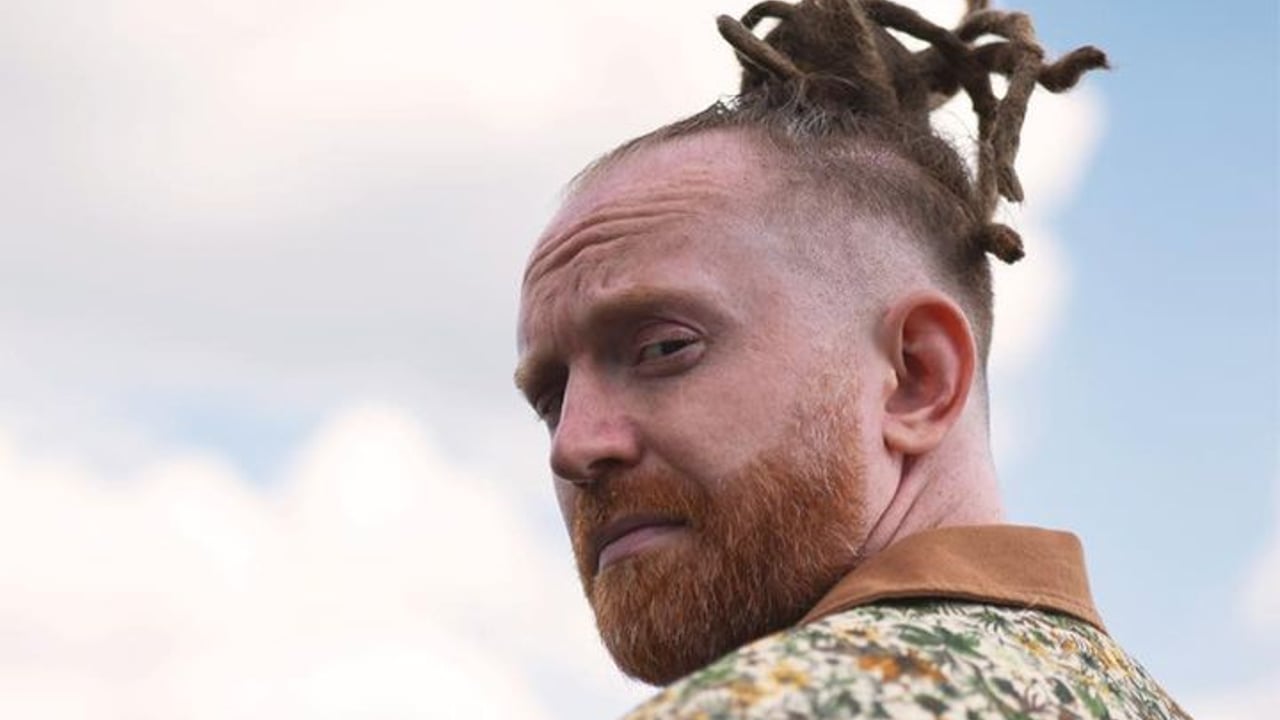
Newton Faulkner
Newton Faulkner first entered our world back in 2007, when his debut album Hand Built By Robots rocketed up the charts all the way to the number one spot. Since then, Newton has toured relentlessly around the world and 2009 saw the release of his second full-length album, Rebuilt By Humans. Newton's latest album Write It On Your Skin, is out now.
“For me, this whole thing really started with Eric Roche,” says Newton. Newton first met Eric when he was a student at the Academy of Contemporary Music in Guildford. Eric was head of guitar at the time and his virtuosic, visual and unconventional style of guitar playing really struck a chord with Newton. Tragically, Eric lost his battle with cancer in 2005, but not without passing on his passion, skill and knowledge to the very capable hands of Mr Faulkner.
After two years at the ACM, Newton gigged continuously around London and the UK, whilst also making appearances at the Lapagestock and South by Southwest festivals in 2005 and 2006 respectively. After securing a publishing deal with PeerMusic UK, Newton was subsequently signed to Sony BMG and released his debut album on 30th July 2007.
The album was eagerly anticipated after the success of the single Dream Catch Me, which, after being named Jo Wiley’s ‘pet sound’ for the week, rose to number seven in the singles charts. Newton raised the bar one more notch when he performed his cover of Massive Attack’s Teardrop on the Dermot O’Leary show in ensuing weeks. Newton’s technical ability shone through as he effortlessly and single-handedly reconstructed the rhythm, bass, harmony and melody of the song by use of just his guitar and his voice - radio listeners were left stunned. On record Newton was one thing, but live, he was on a whole other level.
After touring the UK, USA and building up a strong fan-base in Australia, Newton slipped back into the studio to record his second offering to the world. Working again with producer Mike Spencer in London’s Miloco Studios, Newton started experimenting with more electronic elements to compliment the largely acoustic vibes set up in his first album. Aptly demonstrated in Won’t Let Go, a punchy track co-written with Cornelius, aka Japanese producer-writer Keigo Oyamada. The album also featured more tracks that were co-written with Faulkner’s older brother, Toby, notably Badman, the album opener that is laced with cross-rhythms and a thumping backbeat.
However, before recording started, Faulkner encountered a setback that dramatically changed the course of the album. Newton broke and dislocated his right hand literally days before he was scheduled to get back into the studio. After a little healing time, (and the addition of nine pins and a metal plate into his wrist) Newton started recording and released the aptly named Rebuilt by Humans. Most noteworthy on the album was perhaps the single If This Is It, a stirring, fist-pumping anthem that plays as an ode to the times when Faulkner is on stage and for him, where the music truly lives.
Faulkner now tours with an array of multi-media weapons; including cameras, backlit screens, organ pedals, kick drums and even a real working cassette tape player. As Newton states: “Touring is the best part for me, so being able to go out and give everyone a great and unique show is such an important aspect to think about”. To see Newton live is truly unimaginable and people are often quick to assume that there are backing tracks or some sort of musical wizardry going on behind the scenes. However the only magic that happens will be right there under your nose the whole time. “We don’t use any backing tracks, loop pedals, offstage performers or any of that stuff, what you see is exactly what you get.” Faulkner prides himself on being a performer and his character both on and off stage is truly one and the same. Often spending a good while chatting to the audience between songs and always happy to meet and greet the fans after the show in his trademark relaxed and down to earth fashion. He truly is a musician for the people and of the people.